

Magnific AI for Architectural Rendering: Enhancing Photorealism with AI
Artificial intelligence is transforming architectural visualization. In this article, we explore how Magnific AI can be integrated into a traditional 3D rendering workflow to enhance realism, resolution, and visual impact.
By combining Cinema 4D, Corona Renderer, and AI-powered image enhancement, it is possible to achieve high-quality photorealistic architectural renders suitable for client presentations, competitions, and marketing materials.
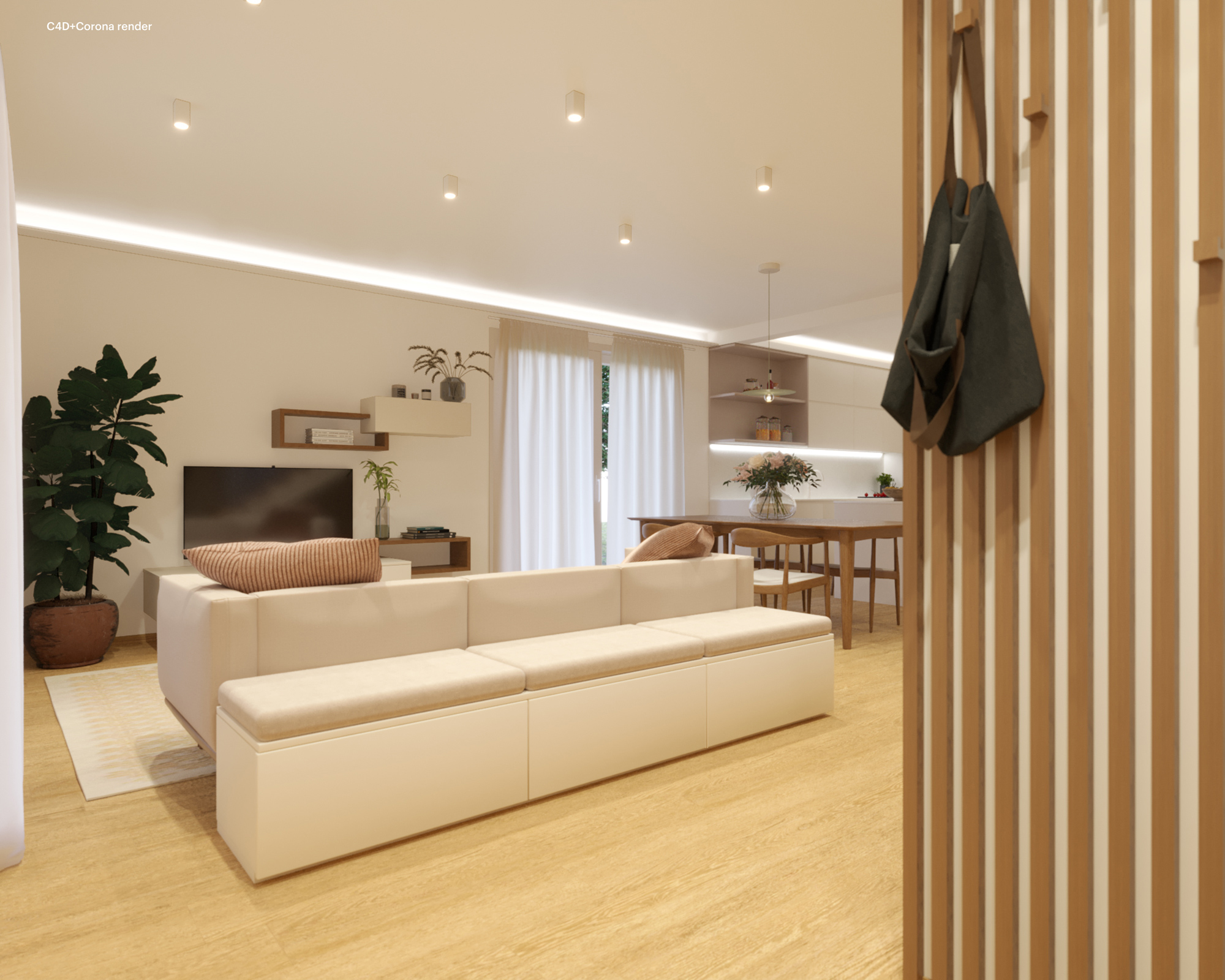
Base architectural render before AI enhancement with Magnific AI.
Introduction: AI-Enhanced Rendering for Architecture and Interior Design
Architectural rendering traditionally relies on accurate modeling, advanced lighting techniques, and high-quality materials. While these fundamentals remain essential, AI tools now offer new possibilities to refine and enhance renders during post-production.
Magnific AI is an advanced AI-based image upscaling and enhancement tool designed to increase resolution while intelligently adding detail, texture, and depth. When used strategically, it complements traditional rendering software rather than replacing it.
Traditional 3D Rendering Workflow: Cinema 4D and Corona Renderer
The workflow begins with a base render created in Cinema 4D using Corona Renderer. At this stage, the focus is on building a solid visual foundation:
- Accurate geometry and proportions
- Balanced natural and artificial lighting
- Physically based materials and textures
- Carefully composed decorative elements
The result is a clean and well-balanced render that communicates spatial qualities and design intent, even before AI enhancement.
Why High-Quality Base Renders Are Essential for AI Enhancement
AI tools perform best when the input image is already well constructed. A strong base render ensures that AI-generated details remain coherent, architecturally accurate, and aligned with the original design.
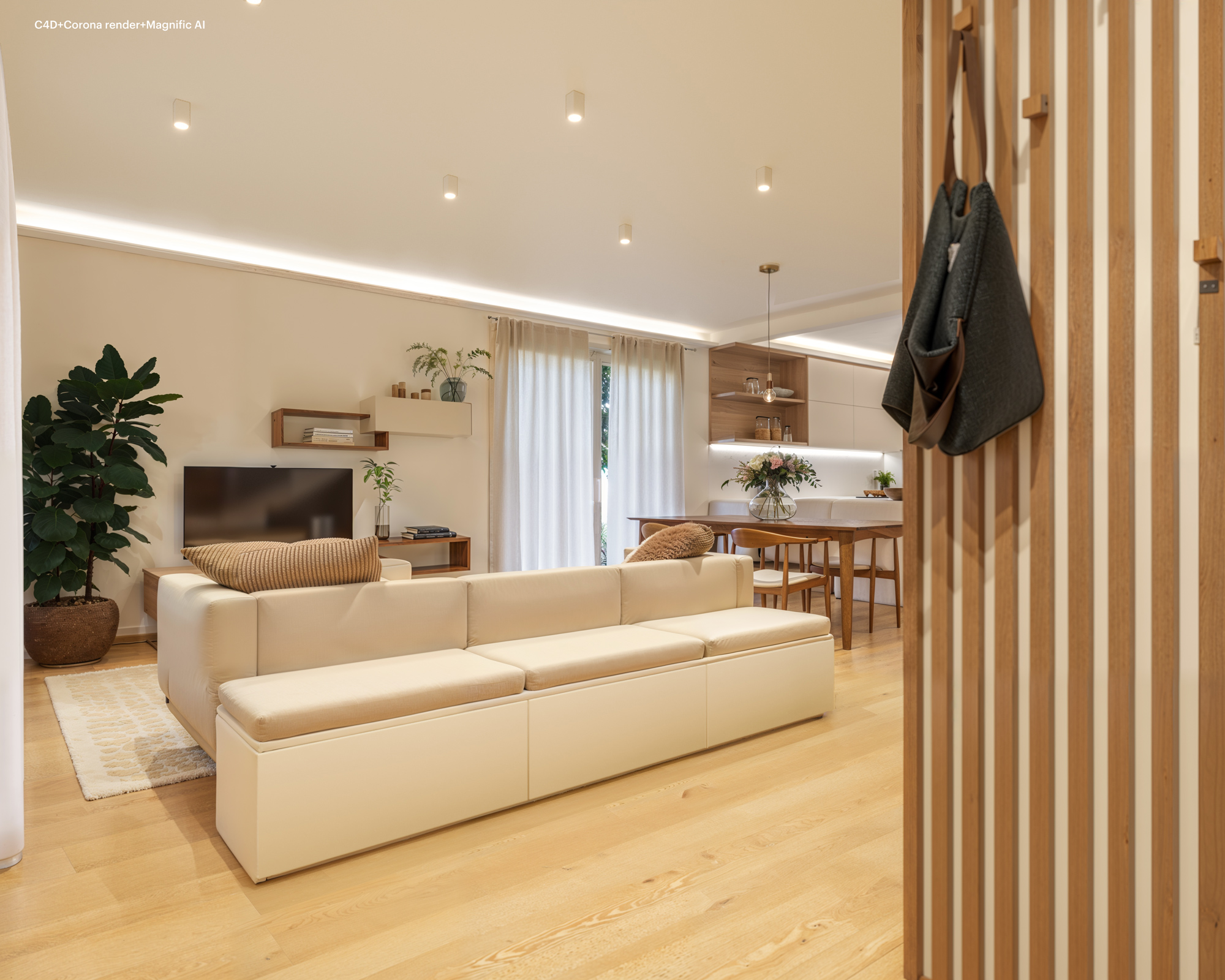
Using Magnific AI to Enhance Architectural Renders
Once the base render is complete, the image is uploaded to Magnific AI for enhancement. Unlike standard upscaling tools, Magnific AI uses generative algorithms to analyze the image and intelligently recreate fine details.
AI Upscaling and Detail Enhancement
Magnific AI allows you to significantly increase image resolution while improving surface texture sharpness, material definition, and micro-details in lighting and shadows. This makes the final render suitable for large-format prints, high-resolution screens, and professional portfolio presentations.
Creativity Control and Prompt-Based Refinement
One of the most powerful features of Magnific AI is the ability to control how much creative interpretation the AI applies. By adjusting creativity levels and using prompt-based guidance, you can influence how new details are generated while preserving design intent.
Maintaining Design Accuracy in AI-Generated Details
In architectural visualization, precision is critical. Magnific AI works best when used as a refinement tool rather than a replacement, preserving proportions, materials, and architectural logic.
Benefits of AI-Enhanced Renders for Architects and Designers
Faster Post-Production
AI enhancement reduces the need for time-consuming manual post-production, allowing visualizers to achieve higher quality results more efficiently.
Higher Visual Impact for Clients and Marketing
Sharper, more detailed renders improve communication with clients and increase the effectiveness of marketing materials in real estate and architectural competitions.
Competitive Advantage in Architectural Visualization
AI-enhanced photorealistic renders help studios stand out in a competitive market, showcasing both technical expertise and innovation.
AI-enhanced rendering is becoming an essential tool in architectural visualization. By combining traditional 3D rendering workflows with AI upscaling tools like Magnific AI, architects and designers can achieve photorealistic results faster while maintaining full creative control. This approach is ideal for interior design visualization, real estate marketing, and high-resolution portfolio production.
Conclusion: The Future of AI in Architectural Visualization
The integration of AI tools such as Magnific AI represents a natural evolution of architectural rendering workflows. When combined with Cinema 4D and Corona Renderer, AI enhancement unlocks new levels of detail, clarity, and realism.
At Render AI Studio, we explore how artificial intelligence can enhance traditional visualization techniques, creating images that are both technically accurate and visually compelling.